
The Ultimate Route Optimization Guide for Waste Haulers
Fuel and driver time are your two biggest variable expenses. Learn how proper route optimization can save you thousands of dollars every month and increase your daily capacity.
In the waste management and equipment rental industry, profit margins are won and lost on the road. Every unnecessary mile driven burns expensive diesel fuel, causes wear and tear on your heavy trucks, and eats up valuable driver hours.
If you are running a roll-off dumpster business, a portable toilet route, or a residential trash service, the way you sequence your daily stops is critical. Relying on driver intuition or manual map-plotting is no longer viable in a competitive market. You need strategic route optimization.
The True Cost of Inefficient Routing
Let's look at the math. A standard commercial roll-off truck gets roughly 4 to 6 miles per gallon. If diesel is $4.00 a gallon, every mile costs you about $0.80 in fuel alone. Add in driver wages, maintenance, tire wear, and depreciation, and your true cost per mile is easily over $2.50.
If inefficient routing causes a single truck to drive just 20 unnecessary miles per day, that costs you $50 a day, $250 a week, or roughly $13,000 per year, per truck. If you run a fleet of 5 trucks, bad routing is costing you $65,000 straight off your bottom line.
Manual Routing vs. Automated Optimization
The Problem with Manual Routing
Many dispatchers still build routes manually. They look at a list of 15 dumpster swaps for the day, pull up Google Maps, and try to guess the most logical sequence.
The human brain is simply not capable of solving the "Traveling Salesperson Problem" efficiently when dealing with multiple variables. A dispatcher trying to manually route a truck cannot easily account for:
- Specific time-window requests from customers.
- The need to visit the landfill in the middle of the route when the truck is full.
- Traffic patterns and road weight restrictions.
- The difference between a "drop" (empty truck needed), a "pickup" (truck becomes full), and a "swap" (truck needs to carry an empty can to replace a full one).
The Power of AI Route Optimization
Modern dispatch and routing software uses advanced algorithms to calculate millions of permutations in seconds.
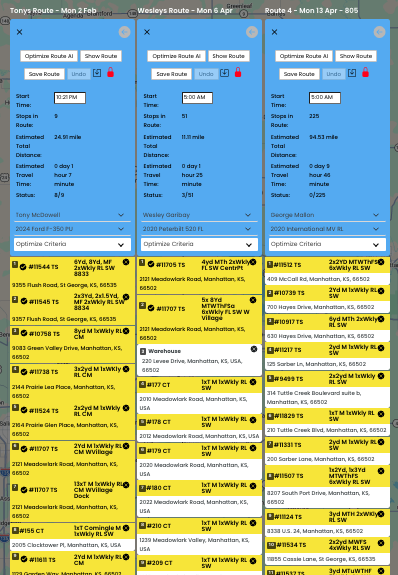
With one click, the software looks at all your jobs for the day, factors in the locations of your yard and the local landfills, and sequences the stops in the exact order that minimizes drive time and mileage.
Key Features of Hauler Routing Software
If you are looking to upgrade your operations, ensure your software includes these routing capabilities:
1. Asset-Aware Routing
Standard delivery routing software (like what Amazon uses) doesn't work for roll-off haulers. A roll-off truck can only carry one container at a time. The software must understand that after picking up a full dumpster, the truck must go to the dump before it can do another job. The routing algorithm must automatically insert landfill runs into the sequence based on truck capacity.
2. Driver Mobile App Integration
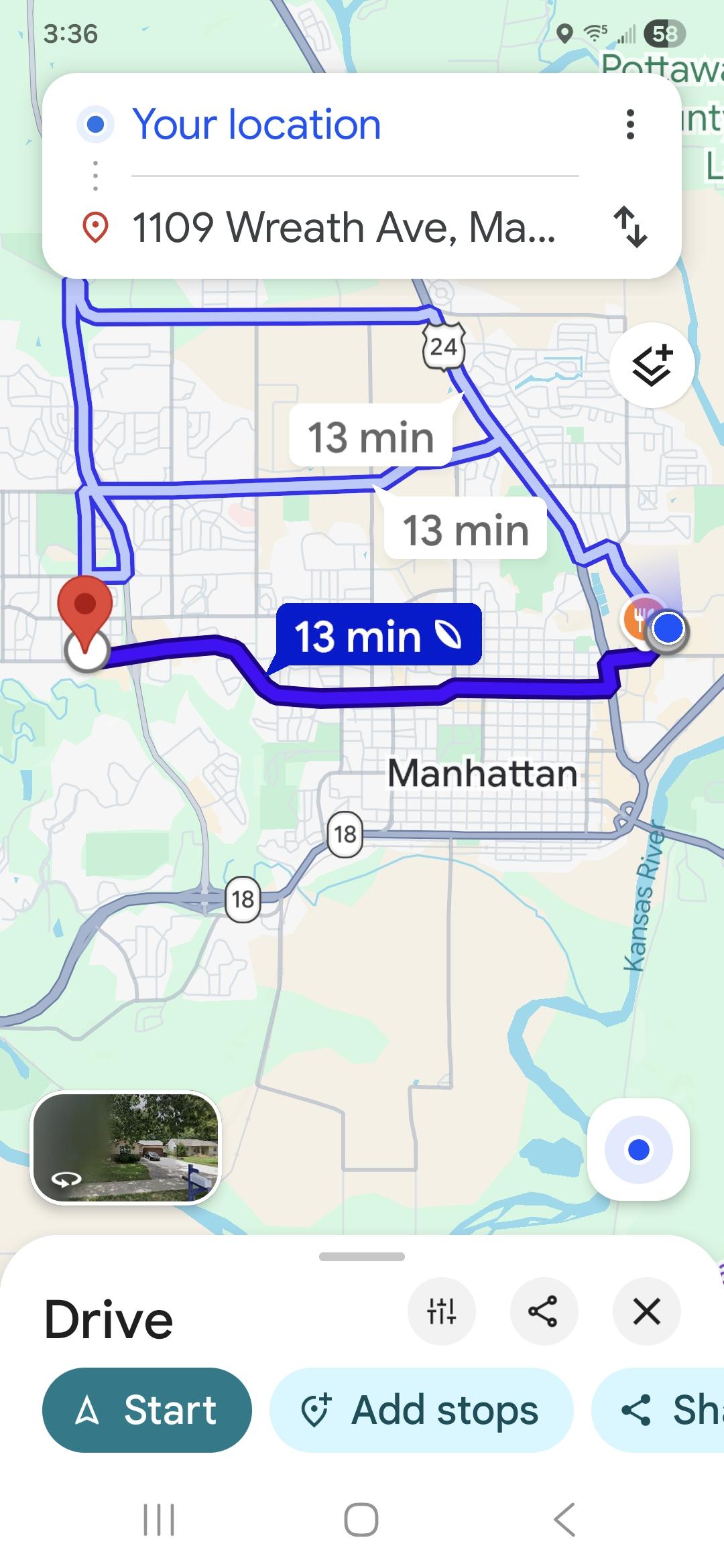
Optimizing the route in the office is useless if the driver doesn't follow it. The optimized sequence must push directly to a Driver Mobile App. The app should provide turn-by-turn navigation (using commercial truck routing to avoid low bridges and weight-restricted roads) and allow the driver to clock in, take photos of the job site, and capture signatures.
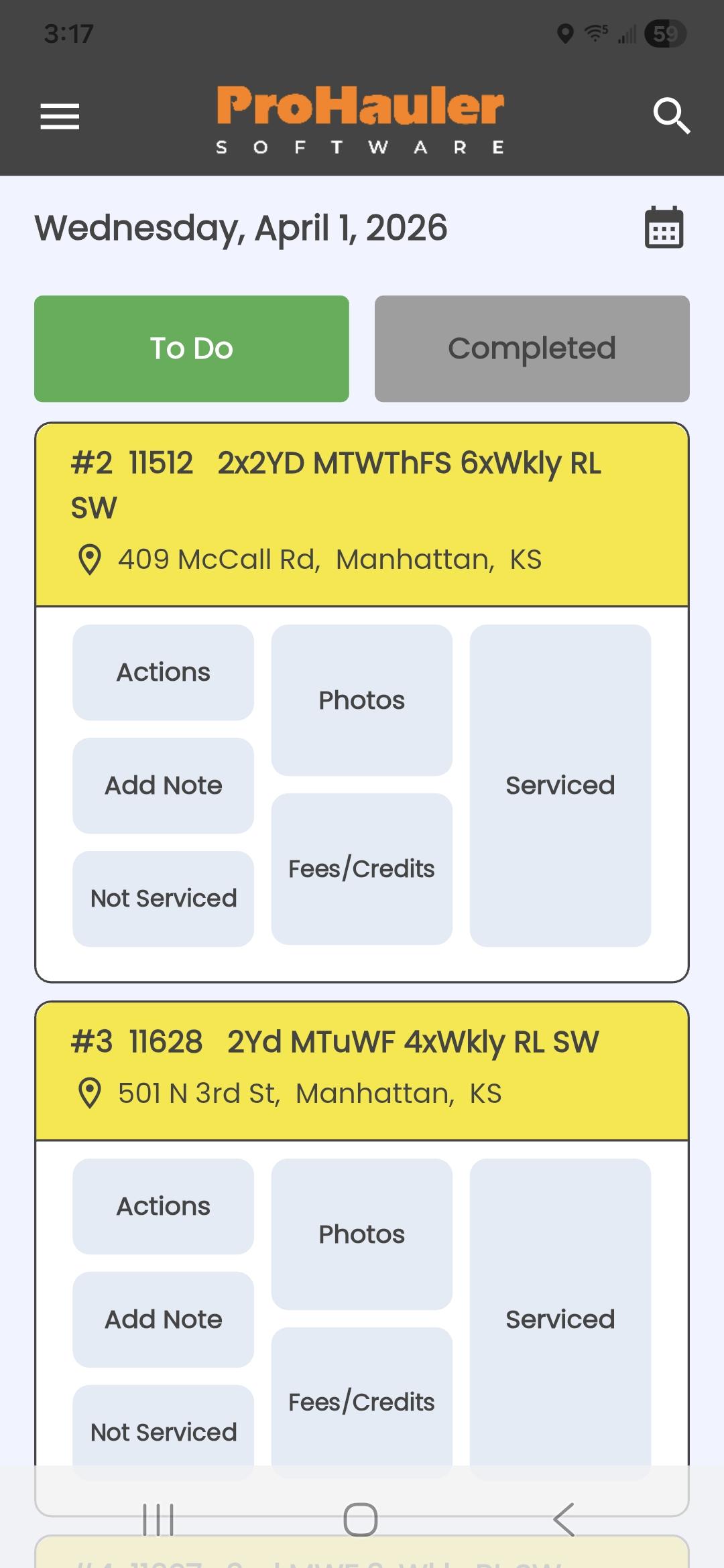
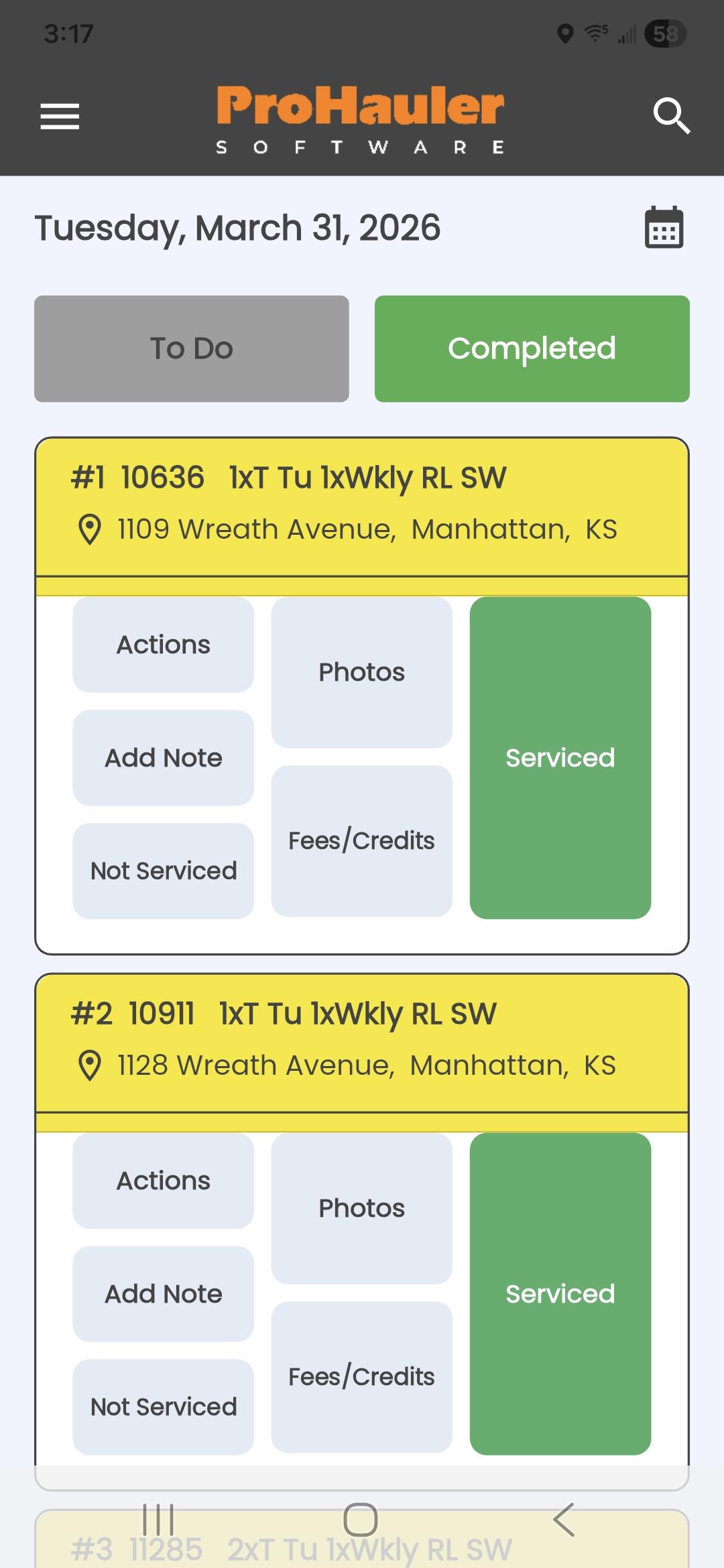
Getting to the next stop is as easy as a single tap. Drivers simply click on the address in their To Do list, and the app instantly launches turn-by-turn navigation to guide them directly to the destination.
3. Real-Time GPS Tracking
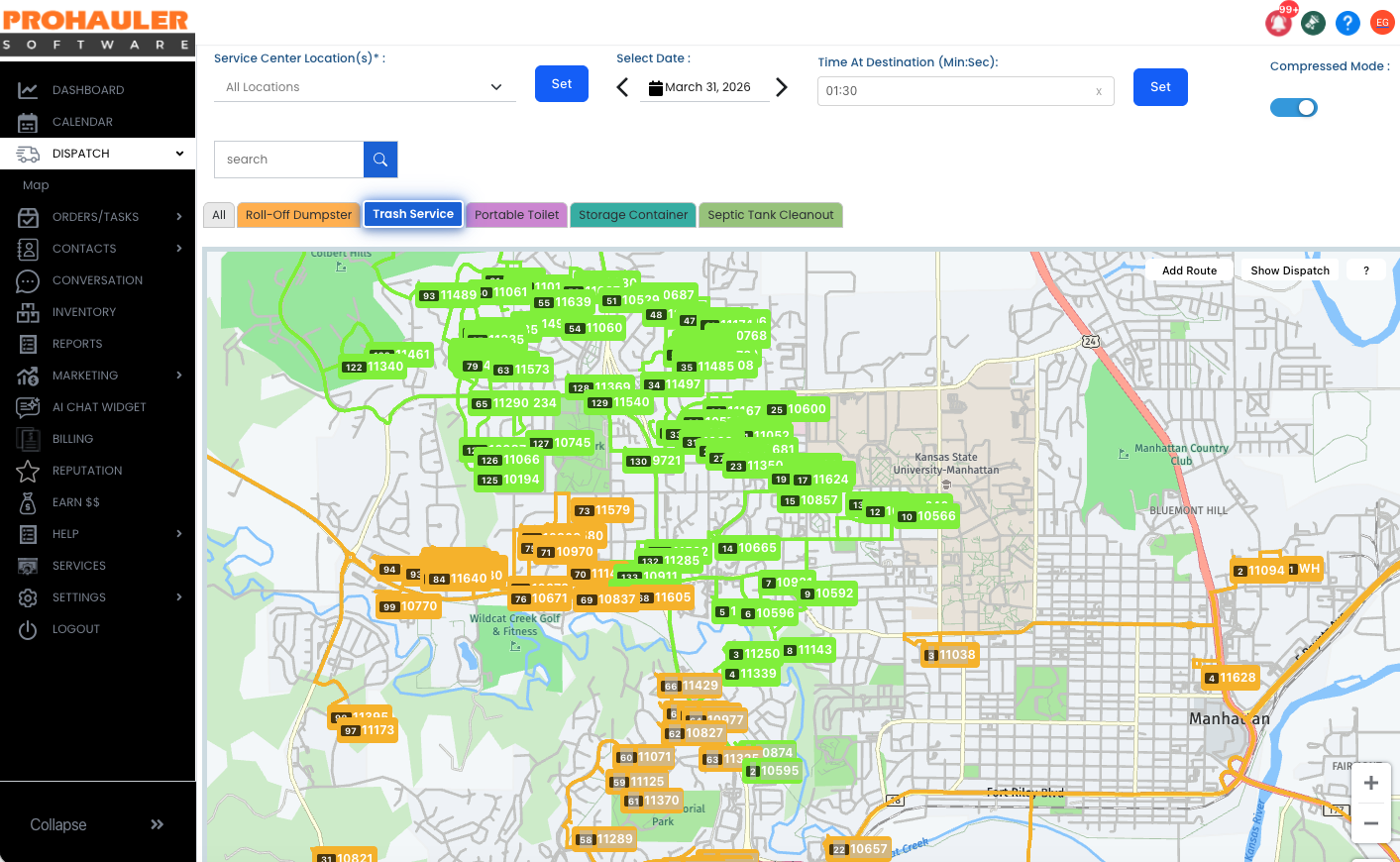
Dispatchers need to see exactly where the trucks are on a live map. If a customer calls asking for an emergency swap, the dispatcher should be able to look at the map, see which truck is closest and empty, and instantly push the new job to that driver's route.
Best Practices for Implementing Route Optimization
- Zone Scheduling: Don't try to service your entire territory every day. Divide your service area into zones (e.g., North County on Mondays/Wednesdays, South County on Tuesdays/Thursdays). This instantly creates route density.
- Train Your Drivers: Drivers are often resistant to new technology. Explain that optimized routing means less time sitting in traffic, fewer stressful turnarounds, and getting home earlier.
- Audit Your Routes: Review the "Planned vs. Actual" mileage reports weekly. If a driver consistently deviates from the optimized route, find out why. Sometimes the software needs a tweak (like avoiding a specific intersection), and sometimes the driver needs coaching.
Conclusion
In a business where margins are tight and fuel costs are unpredictable, route optimization is not a luxury—it is a necessity. By investing in the right software, you can increase your daily job capacity without buying more trucks, reduce your fuel bills, and run a leaner, more profitable hauling operation.
Stop Wasting Fuel and Time
ProHauler Software features built-in, AI-powered route optimization designed specifically for the waste management industry. Sequence your drops, swaps, and pickups with one click and push them directly to your drivers' phones.
- One-Click Route Optimization
- Dedicated Driver Mobile App
- Live GPS Fleet Tracking