
Portable Toilet Service Scheduling Best Practices
Scheduling is the heartbeat of a portable sanitation business. If your scheduling is chaotic, your drivers will waste time, fuel costs will skyrocket, and customers will complain about dirty units.

The Complexity of Porta Potty Scheduling
Unlike a delivery business where you drop something off and never see it again, portable toilets require ongoing, recurring maintenance. A dispatcher has to balance:
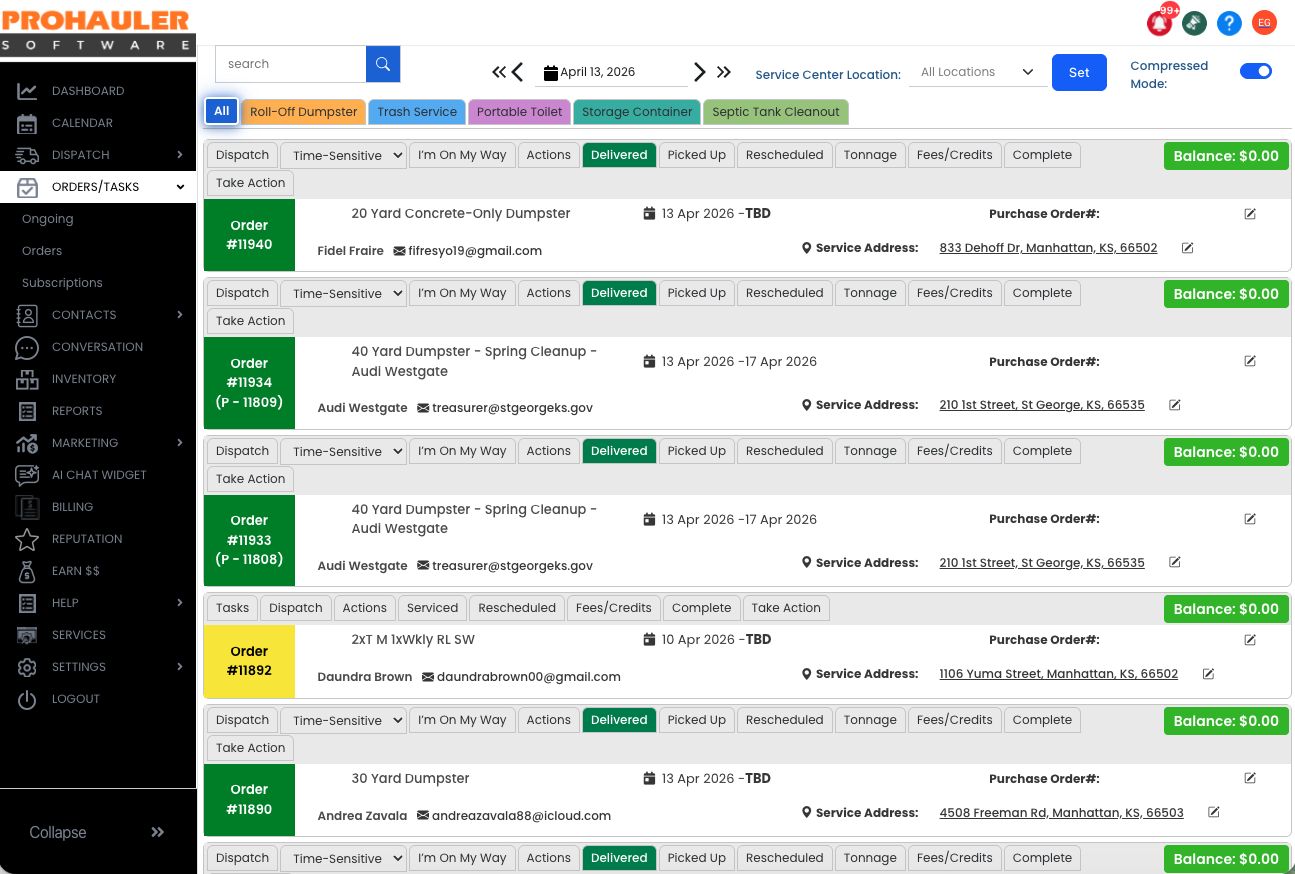
- Deliveries: Dropping off new units at fresh job sites.
- Pickups: Retrieving units from completed jobs.
- Recurring Services: The weekly pumping and cleaning of active rentals.
- Emergencies: Tip-overs, overflows, or immediate event needs.
Best Practice 1: Separate Delivery Trucks from Pump Trucks
If you have the fleet size, never mix your routes. Use flatbed trucks or trailers for deliveries and pickups, and use your vacuum pump trucks exclusively for servicing.
A pump truck is an expensive asset designed to pump waste. If that truck is spending 45 minutes strapped down delivering a single unit, it is not pumping waste and generating service revenue. Keep your pump trucks pumping.
Best Practice 2: Zone Your Service Areas by Day
Do not service the entire city every day. Divide your service area into geographic zones and assign specific days to specific zones.
- Monday: North Zone
- Tuesday: East Zone
- Wednesday: South Zone
- Thursday: West Zone
- Friday: Event Deliveries & Catch-up
When a contractor in the North Zone requests a unit on a Wednesday, you tell them, "We can deliver it today, but your weekly service day will be Monday." This maintains route density.
Ditch the Whiteboard
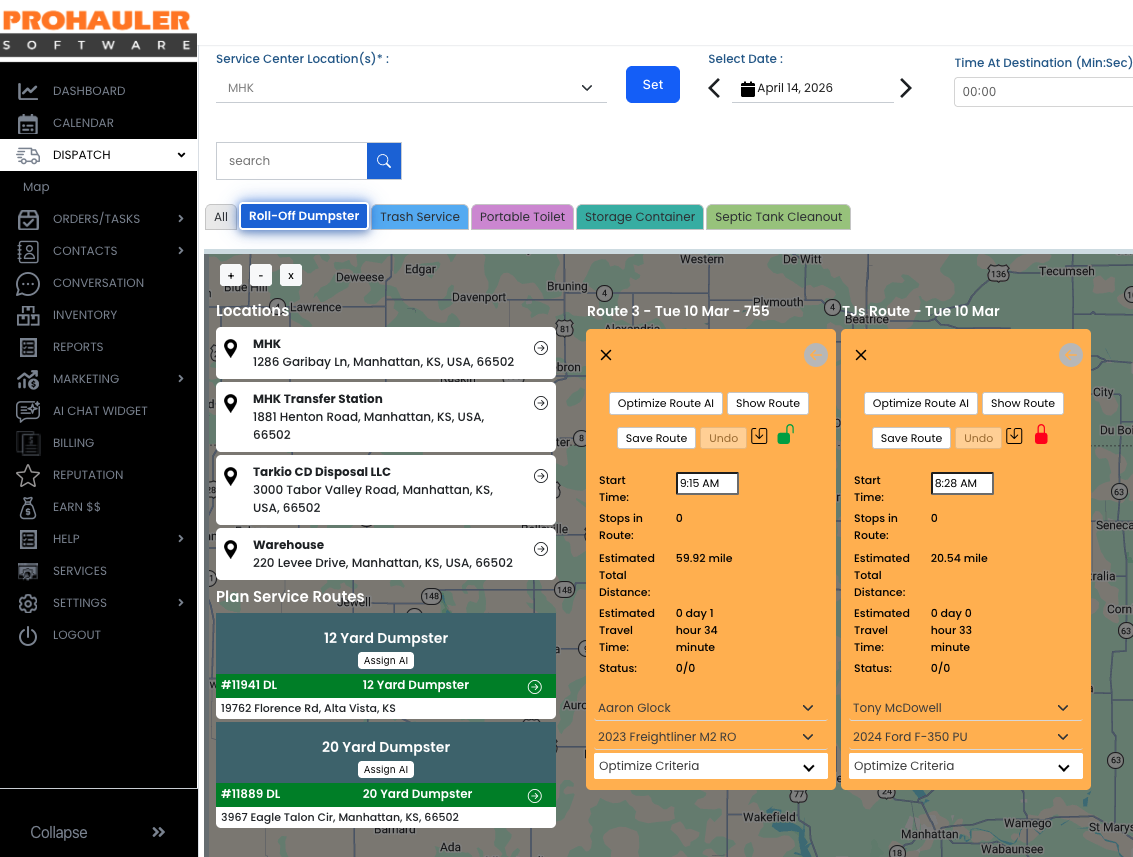
Managing recurring schedules on a whiteboard leads to missed services. If you want to automate scheduling, routing, and billing, check out our Portable Toilet Rental Software. It automatically adds recurring services to your daily routes.
Best Practice 3: Standardize the Service Procedure
Scheduling assumes that every service takes a predictable amount of time. If one driver takes 5 minutes per unit and another takes 15, your schedule will fall apart. Standardize the 8-step service:
- Park safely and pull the hose.
- Pump the waste tank completely dry.
- Remove debris and trash from the urinal and tank.
- Refill with 5 gallons of fresh water and deodorizer (blue juice).
- Spray down and wipe the interior walls, seat, and urinal.
- Restock 2 rolls of toilet paper.
- Restock hand sanitizer.
- Sign and date the service sticker inside the door.
A trained driver should complete this process in 5 to 7 minutes per unit.
Best Practice 4: Buffer for Dumping Time
A schedule is not just about driving to job sites; it is about managing tank capacity. A standard pump truck holds 1,000 to 1,500 gallons of waste. Since a portable toilet tank holds about 60 gallons (and is usually pumped when half full), a truck can service roughly 30 to 40 units before it must go to the wastewater treatment plant.
Always schedule the disposal run (the "dump") into the driver's day. If the treatment plant closes at 4:00 PM, the driver's route must be structured to arrive by 3:30 PM, regardless of how many stops are left.
Frequently Asked Questions
How many portable toilets can a driver service in a day?
A highly efficient driver on a dense route can service 60 to 80 units per day. In rural areas with high drive times, 30 to 40 units per day is more realistic.
What happens if a customer misses their scheduled service day?
If a unit is inaccessible (e.g., behind a locked gate or blocked by construction equipment), the driver should take a photo, log a "blocked service," and move on. The customer is still billed, and a return trip incurs an extra fee.
How do you schedule event porta potties?
Event units are typically delivered on Thursdays or Fridays and picked up on Mondays. This keeps weekend event logistics separate from your Monday-Friday construction routes.