
How to Optimize Routes for Portable Toilet Servicing
In the portable sanitation industry, you don't make money when your trucks are driving; you make money when the vacuum pump is running. Route optimization is the key to maximizing profit margins.
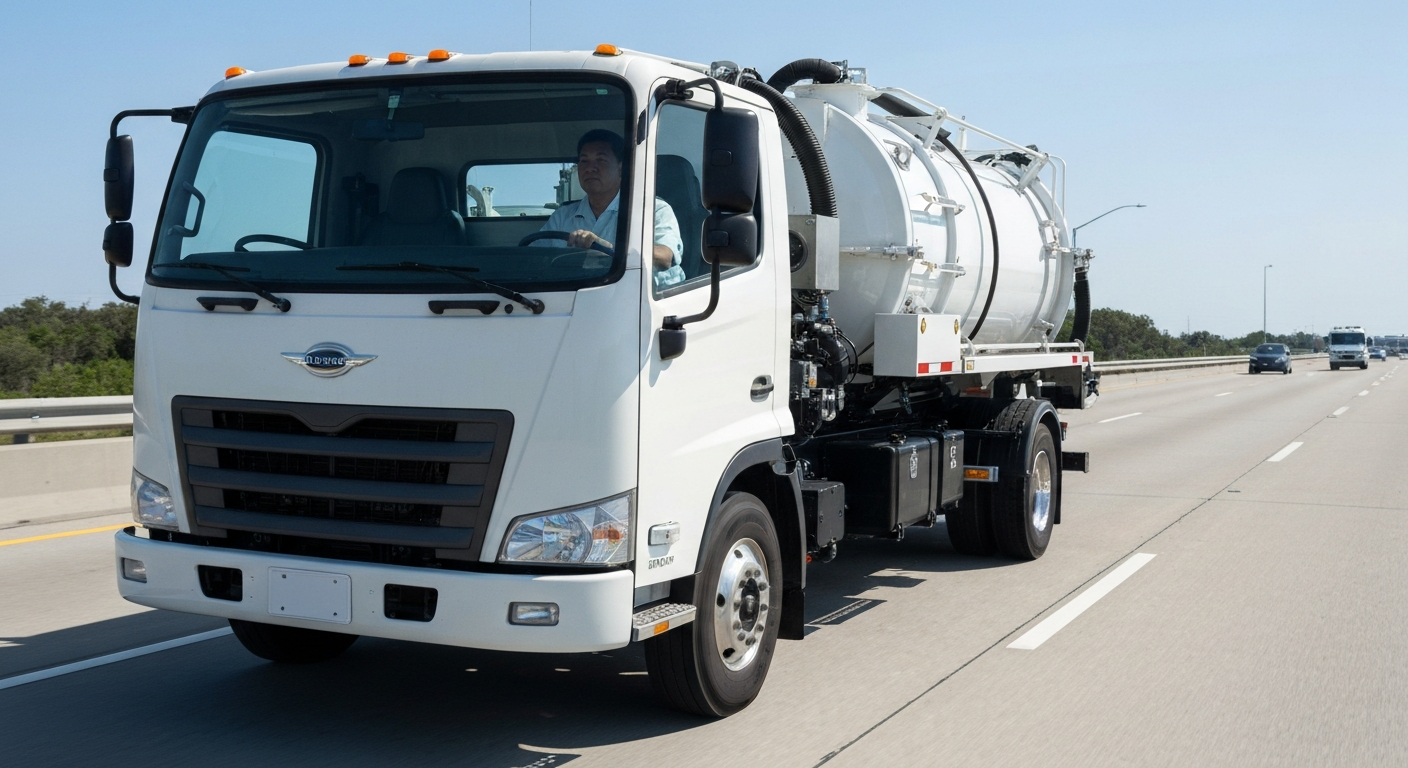
The Cost of Inefficient Routing
Consider a pump truck that gets 8 miles to the gallon. If a driver has 40 stops scattered randomly across the city, they might drive 120 miles in a day. That's 15 gallons of diesel fuel, plus hours of expensive labor spent staring at a steering wheel.
By optimizing that route, you might reduce the mileage to 60 miles. You've just cut your fuel costs in half and freed up 2 hours of your driver's time—time they can use to service 15 additional units.
Step 1: Implement Geographic Zoning
The foundation of route optimization is zoning. Divide your service territory into 4 or 5 geographic zones. Assign each zone a specific day of the week.
When a contractor rents a unit, they don't usually care what day it gets serviced, as long as it gets serviced once a week. By forcing all services in the North Zone to Monday, you instantly create route density. Your driver isn't driving from the North Zone to the South Zone; they are driving from block to block.
Step 2: Sequence for Right-Hand Turns
Delivery companies like UPS famously design routes to minimize left-hand turns. Left turns across traffic waste time idling at intersections and increase the risk of accidents.
When sequencing a route, arrange the stops so the driver makes continuous loops utilizing right-hand turns whenever possible. This is nearly impossible to do manually on a map, which is why software is critical.
Stop Routing Manually
Building routes on Google Maps takes hours. If you want to automate scheduling, routing, and billing, check out our Portable Toilet Rental Software. Our AI routing engine builds the most efficient paths instantly.
Step 3: Factor in Disposal Facilities (The Dump)
Unlike a FedEx truck that gets lighter as the day goes on, a pump truck gets heavier. A route must be optimized not just for distance, but for tank capacity.
If your truck holds 1,000 gallons, and the average service pulls 30 gallons, your truck is full after 33 stops. The route must be sequenced so that stop #33 is geographically close to the wastewater treatment plant. Driving a fully loaded, heavy truck 40 miles across town to dump wastes massive amounts of fuel.
Step 4: Use Asset Tracking and Geofencing
Construction sites are chaotic. A unit dropped off at the front of a site on Monday might be moved by a forklift to the back of the site by Friday.
Optimized routing requires exact coordinates. Drivers should drop a GPS pin (or scan a barcode/RFID tag) exactly where the unit is located. When the routing software sequences the stops, it routes the driver to the exact GPS coordinates, not just the street address.
Step 5: Handle "Blocked" Services Efficiently
A major efficiency killer is the "blocked unit." A driver arrives, but a bulldozer is parked in front of the porta potty.
Drivers should not wait around for 20 minutes trying to find the site superintendent. The protocol should be: take a photo of the blocked unit, log it in the driver app, and move to the next stop. The software should automatically email the contractor the photo, explaining that the service was attempted but blocked, and the unit will be serviced next week (or they can pay a fee for a return trip).
Frequently Asked Questions
What is route density?
Route density refers to the number of service stops within a specific geographic area. High route density means less drive time between stops, resulting in higher profitability per hour.
Do I need software to optimize routes?
If you are servicing more than 50 units a week, manual routing becomes highly inefficient. Specialized routing software considers traffic, turn restrictions, and disposal facility locations automatically.
How do you track portable toilets on a route?
Most modern operators use QR codes, barcodes, or RFID tags attached to each unit. The driver scans the tag with their mobile app to prove the service was completed and log the exact GPS location.